
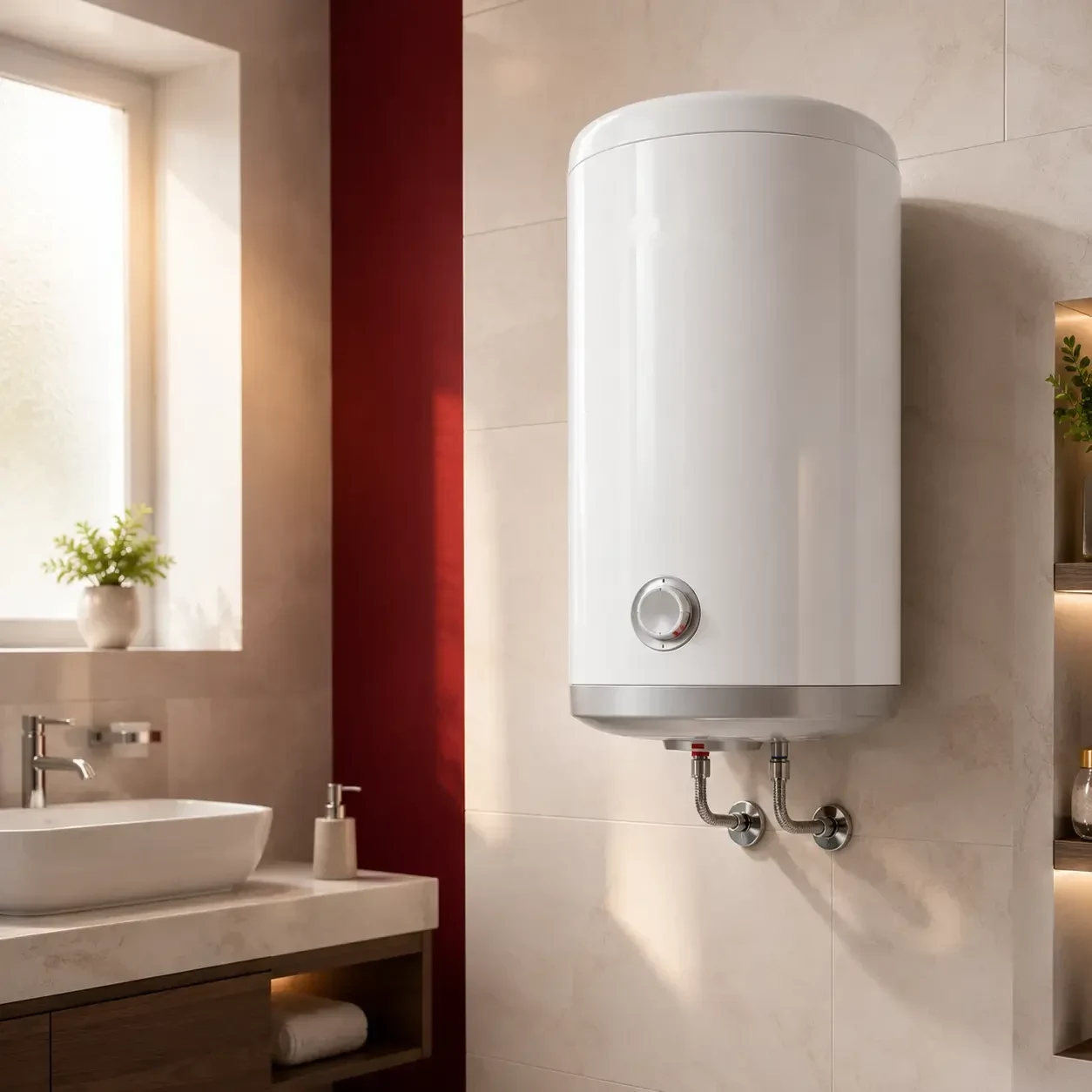
There’s no good time for a heater that won’t heat — all of them are bad, and the worst is a winter morning before work. Ariston heaters are among the longest-serving heaters entering Egyptian homes, but like any appliance running on water and electricity together: when it tires, it tires for known, ordered reasons. Let’s take them one by one — from the simplest to the most complex.
Before anything: 3 checks from outside the heater (two minutes)
1. Is the electricity actually arriving?
Look at the indicator light: lit? If off — try the heater’s breaker in the electrical panel (it may have tripped), and try the plug or the heater switch. If the light comes back on, wait an hour and try the water.
2. Is the thermostat at the right setting?
Many heaters have a visible control dial — someone may have turned it down during cleaning. Set it to a medium position (around 55–60 degrees) and wait.
3. Is the water itself flowing right?
Open the hot-water tap fully — if the water is weak to begin with (hot then cold), the problem may be water pressure, not a heater fault.
Done all three and the water is still cold? Then the fault is inside the heater — and here the diagnosis is ordered like this:
Cause one and most common: the flange (heating element)
The flange is the actual heater — a metal element submerged in the water heating it like a big kettle element. Over time one of two things happens: It burns out completely: its lifespan ends, or it runs on a pocket of air when the water drops — the result is completely cold water despite everything looking like it’s working. It gets covered in deposits: an insulating calcium layer makes it heat very slowly and consume many times the electricity — and that shows weeks earlier as a boiling and cracking sound from inside the heater.
Changing the flange with a genuine one (with its gasket) is done at home in a single visit, and with it the magnesium rod (anode) that protects the tank from rust is checked — if corroded it’s changed in the same visit, and that’s the cheapest protection for the most expensive part of your heater.
📞 Water completely cold? A specialist heater technician reaches you — call: 16062, inspection free
Cause two: the thermostat
The thermostat is the brain that decides when the flange runs and when it cuts off. When it tires: Not passing at all → cold water despite a sound flange. Cutting off early → permanently lukewarm water however long you wait. Glitching → very hot then suddenly cold — the fluctuating heat you feel in the shower.
Telling a flange fault from a thermostat fault needs a meter — and the upside is the thermostat is cheaper, so if it’s the cause you save.
Cause three: the thermal safety cut-off tripped
Ariston heaters have a safety cut-off that disconnects heating if the temperature exceeds a set limit. If it tripped, there’s usually a reason that made the temperature rise — a glitching thermostat or choking deposits. So resetting it without treating the cause isn’t a fix — the technician resets it after finding out why it tripped.
A special case: it trips the electricity the moment it runs
If the main breaker trips every time the heater tries to heat — that’s not “not heating,” that’s an electrical leak from the flange and the breaker is protecting you. Don’t force the breaker back up permanently: unplug the heater and call immediately — that’s a priority case with us.
A few things to keep in mind
Don’t buy a flange from outside and fit it yourself — gasket sizes and types differ, and a mistake leaks water onto electricity. After any repair, ask for a check of the safety valve and connections — with us that’s standard on every visit, not a special request. And if your heater has passed 8–10 years and its faults are recurring, ask the technician honestly: repair or is replacement better? — and he’ll answer you honestly. Note that hard-water areas like Giza’s Haram and Faisal scale flanges fastest; see the Ariston service in Giza page.
Bottom line
An Ariston heater not heating = usually a flange or a thermostat, and before them two minutes of electricity checks and setting. All of it is fixed at home with genuine parts and a written 6-month warranty — and it starts with a single call.
Frequently asked questions
Ariston heater on and the light lit but the water is cold — what's the cause?
The light says the electricity is arriving, only — not that the heating is working. The most common cause is the flange (heating element) burnt out or covered in insulating deposits, or a faulty thermostat not passing power to the element. A precise diagnosis is done with a meter, and the technician changes the part with a genuine one in a single visit.
Do deposits really affect heating?
Very much — the water in most areas of Egypt is hard, and the calcium layer forms on the flange within a year or two and insulates it from the water: slower heating, more electricity, and a boiling and cracking sound. Regular cleaning restores efficiency and extends the heater's life.
How do I know the problem is the heater's capacity and not a fault?
If the heater heats well but the water runs out faster than it used to, that's usually a fault (deposits or the thermostat). But if from the day it was installed the water was never enough for the household's use, that's usually a capacity smaller than the need — the technician tells you the difference after the check.
Does changing the flange take time and is it done at home?
Yes — changing the flange or thermostat is done in your home in a single visit usually: draining the heater, changing the part with a genuine one and its gasket, and a full test with a safety check. The inspection beforehand is free and the price is announced before the work.
Still stuck? Leave it to us
A specialist technician reaches you with the common spare parts — free inspection, a price announced before any work, and a written 6-month warranty.